The Serengeti Wildebeest Migration is one of the most extraordinary wildlife spectacles on Earth. Often referred to as the Great Migration, this remarkable natural event sees more than two million wildebeest, accompanied by hundreds of thousands of zebras and gazelles, travel across the vast Serengeti-Mara ecosystem in search of fresh grazing and water. The migration is a continuous cycle driven by seasonal rainfall rather than fixed dates, making every safari unique.
For many travelers, witnessing the Great Migration is the ultimate reason for visiting Tanzania. However, one of the most frequently asked questions is, “When is the best time to plan a Serengeti Wildebeest Migration Safari?” The answer depends on the type of migration experience you hope to witness. Throughout the year, different regions of the Serengeti offer unique wildlife encounters, from the dramatic river crossings to the calving season and predator action.
At Great Journey Safaris, we help travelers plan their safari according to migration movements, ensuring the best possible opportunity to experience one of nature’s greatest wonders.
Understanding the Serengeti Wildebeest Migration
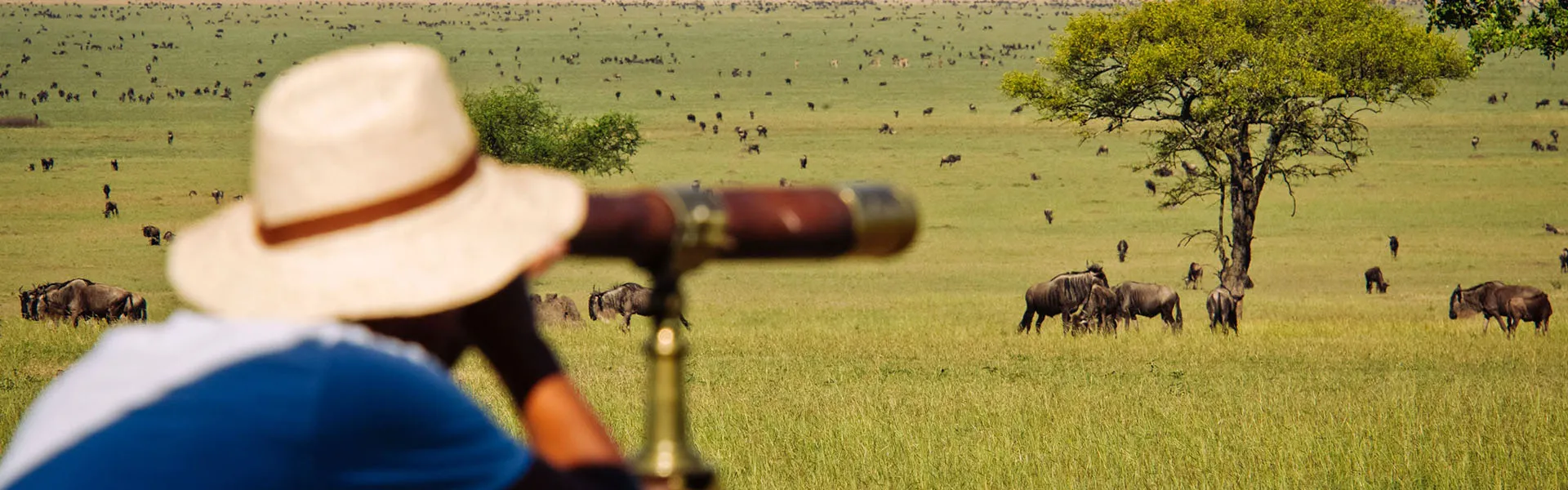
The Great Migration is not a single event that occurs over a few weeks. Instead, it is a year-round movement of wildebeest, zebras, Thomson’s gazelles, and other herbivores following rainfall patterns across the Serengeti ecosystem.
As the rains bring fresh grass to different regions, the herds instinctively move in search of food and water. Predators such as lions, cheetahs, leopards, hyenas, and crocodiles follow the migration closely, creating one of the world’s most fascinating wildlife dramas.
Because rainfall varies from year to year, the exact timing of herd movements cannot be predicted with complete certainty. Experienced safari guides continuously monitor the migration to maximize wildlife viewing opportunities.
Why Timing Is Important
Planning your safari during the right period significantly increases your chances of witnessing the migration event that interests you most.
Some travelers dream of seeing thousands of wildebeest crossing crocodile-filled rivers, while others prefer the calving season, when thousands of newborn calves attract large numbers of predators. Many photographers seek dramatic action scenes, while families may prefer quieter periods with fewer visitors.
Understanding the annual migration cycle helps you choose travel dates that match your expectations and interests.
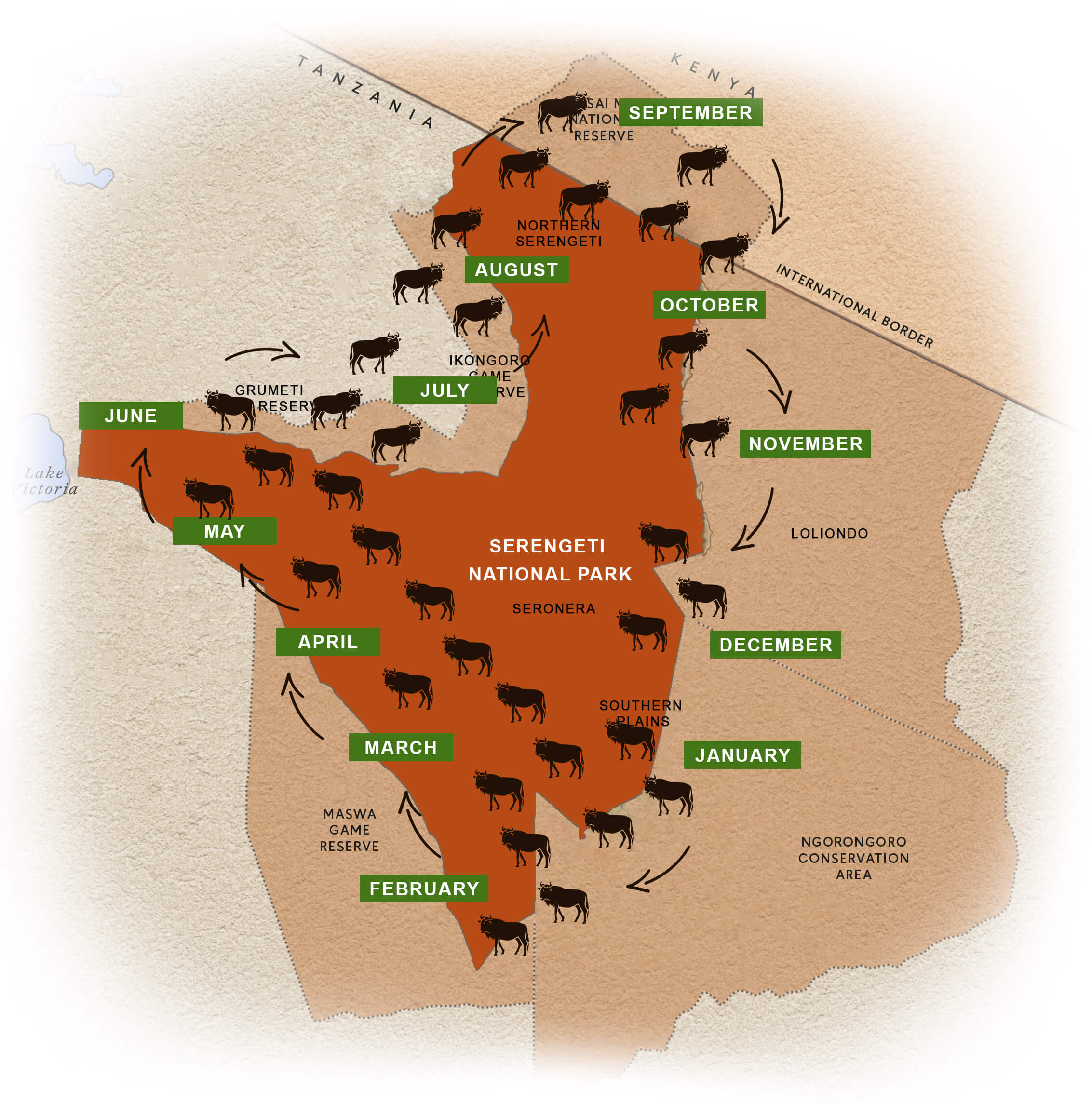
January to March – The Calving Season in Southern Serengeti
The beginning of the year is widely regarded as one of the best times to visit the southern Serengeti and the Ndutu region.
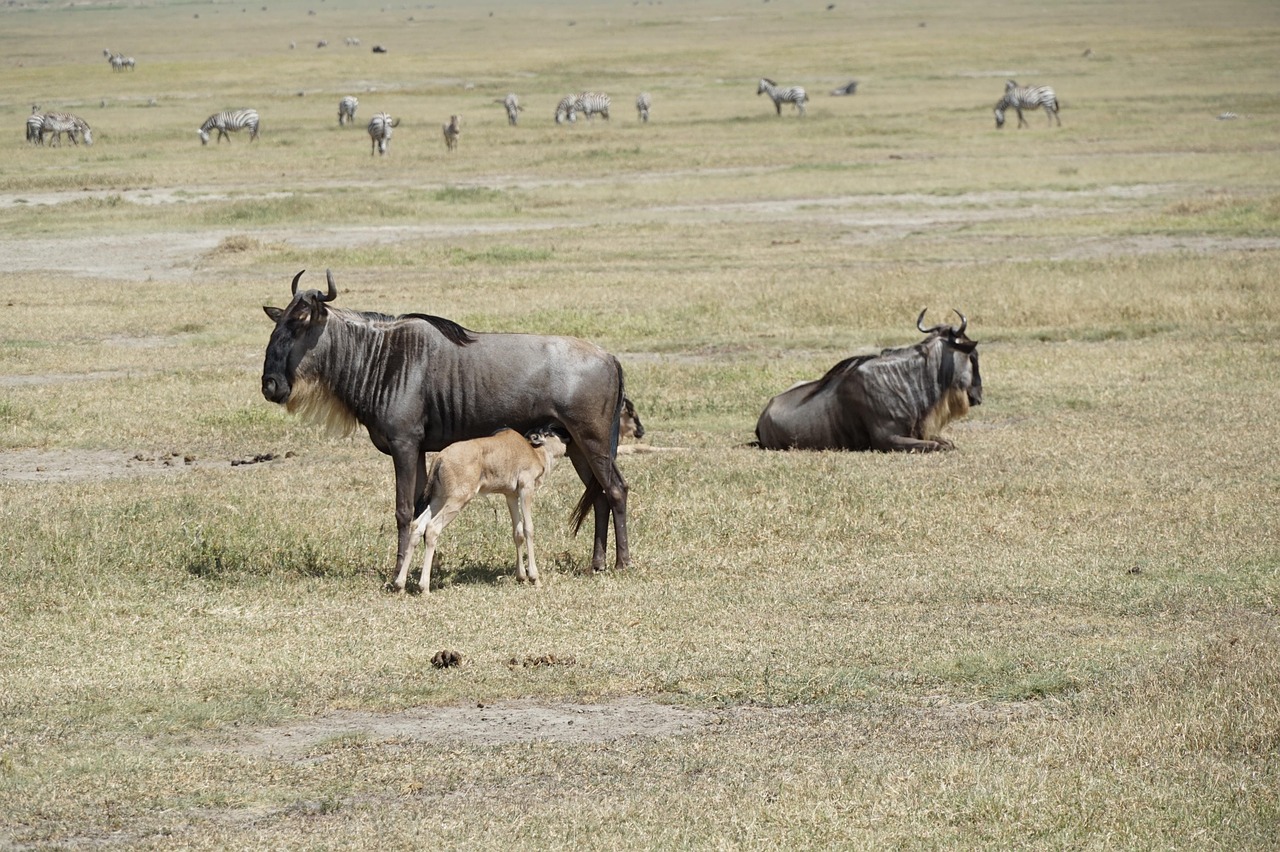
Following the short rains, the southern plains become lush with fresh grass, providing ideal grazing conditions for pregnant wildebeest. Between late January and March, hundreds of thousands of calves are born within a remarkably short period.
Witnessing thousands of newborn wildebeest taking their first steps is an unforgettable experience. The abundance of vulnerable young animals also attracts numerous predators, creating exceptional opportunities to observe lions, cheetahs, hyenas, and leopards in action.
For wildlife photographers, this season offers dramatic predator-prey interactions alongside beautiful green landscapes.
April and May – The Green Season Migration
April and May coincide with Tanzania’s long rainy season. Although some travelers avoid this period due to occasional rainfall, it offers remarkable advantages for visitors seeking fewer crowds and spectacular scenery.
During these months, the herds gradually begin moving northwest as they leave the southern plains. The landscapes are incredibly green, rivers flow strongly, and birdlife is particularly abundant.
While weather conditions may occasionally affect road access, experienced guides continue tracking the migration, providing rewarding wildlife experiences in a quieter atmosphere.
Travelers who appreciate peaceful game drives and lush landscapes often find this period highly rewarding.
June – The Migration Heads Toward the Western Corridor
By June, the rains begin to subside, and the migration moves toward the Western Corridor of Serengeti National Park.
Large herds travel across open plains while gathering near the Grumeti River. This stage of the migration offers exciting wildlife viewing as predators follow the herds through varied landscapes.
Although Grumeti River crossings are generally smaller than those at the Mara River later in the year, they remain dramatic and provide excellent photographic opportunities.
The pleasant weather during June also makes game drives particularly comfortable.
July to October – The Famous Mara River Crossings
For many travelers, July through October represents the highlight of the Serengeti Wildebeest Migration.
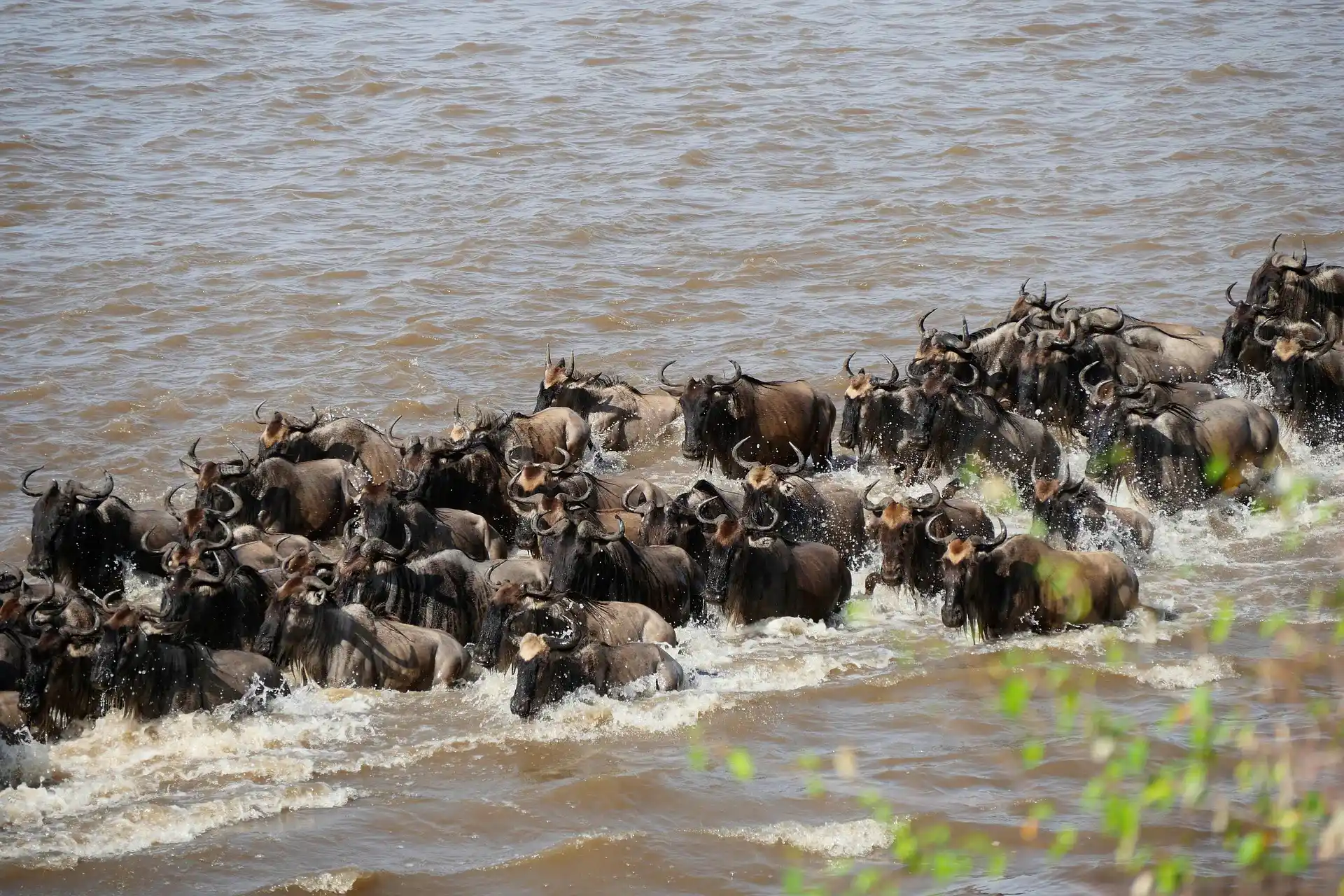
During these months, enormous herds gather along the Mara River in the northern Serengeti before attempting dangerous river crossings into Kenya’s Maasai Mara ecosystem.
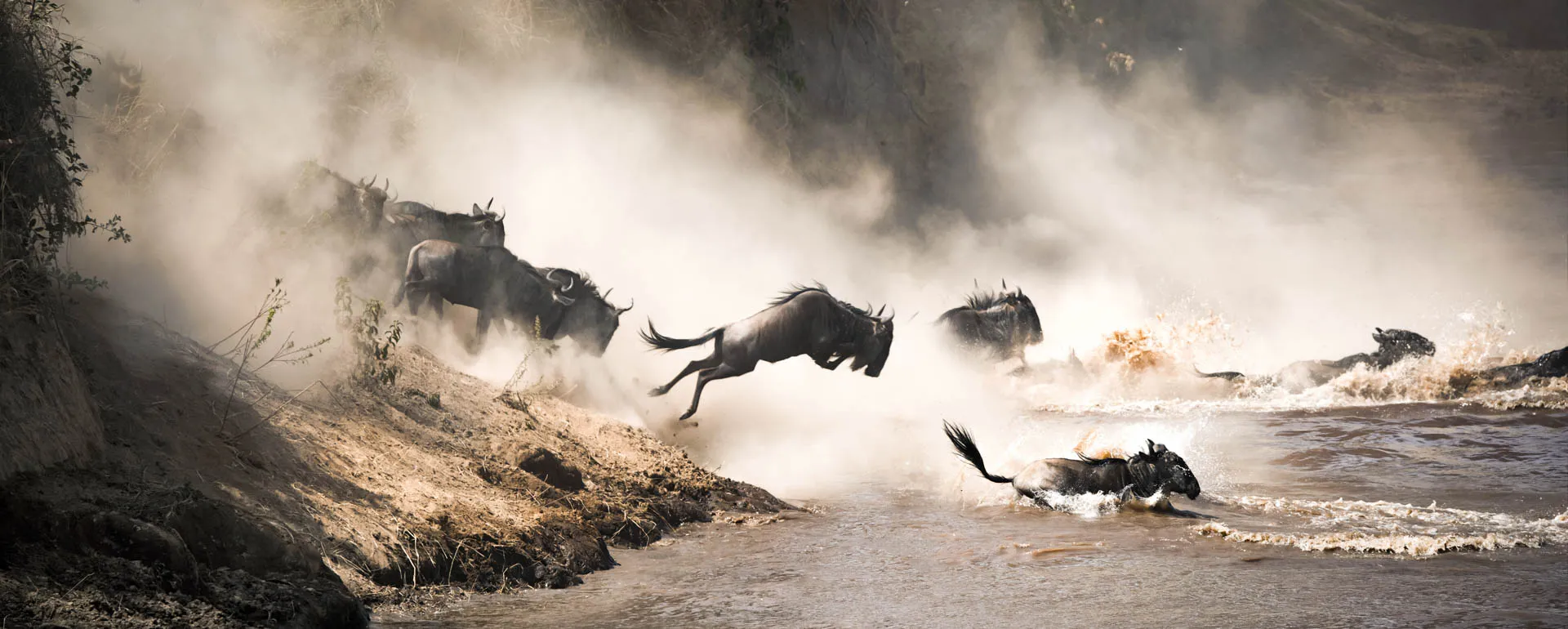
These crossings are among the most dramatic wildlife spectacles in Africa. Thousands of wildebeest plunge into crocodile-filled waters while navigating steep riverbanks, strong currents, and intense pressure from the surrounding herd.
The exact timing of each crossing cannot be predicted because animals often wait for hours or even days before crossing. Experienced guides remain patient and carefully position vehicles to maximize viewing opportunities.
This period is particularly popular among photographers and wildlife enthusiasts seeking iconic migration images.
November – Returning to the Central and Eastern Serengeti
As the short rains begin in November, the migration gradually starts moving southward once again.
Fresh grass begins growing across the central and eastern Serengeti, encouraging the herds to continue their annual cycle toward the southern plains.
Although river crossings have largely concluded, November offers excellent general game viewing with fewer visitors compared to the peak migration months.
Changing weather patterns also create beautiful skies that photographers often appreciate.
December – Preparing for Another Calving Season
By December, large portions of the migration return toward the southern Serengeti and Ndutu region.
The herds continue feeding on nutrient-rich grasses while pregnant females prepare for the upcoming calving season.
Visitors during December enjoy excellent wildlife viewing, beautiful green landscapes following the short rains, and increasing concentrations of wildebeest across the southern plains.
The festive season also makes December a popular time for family safaris.
Wildlife Beyond the Migration
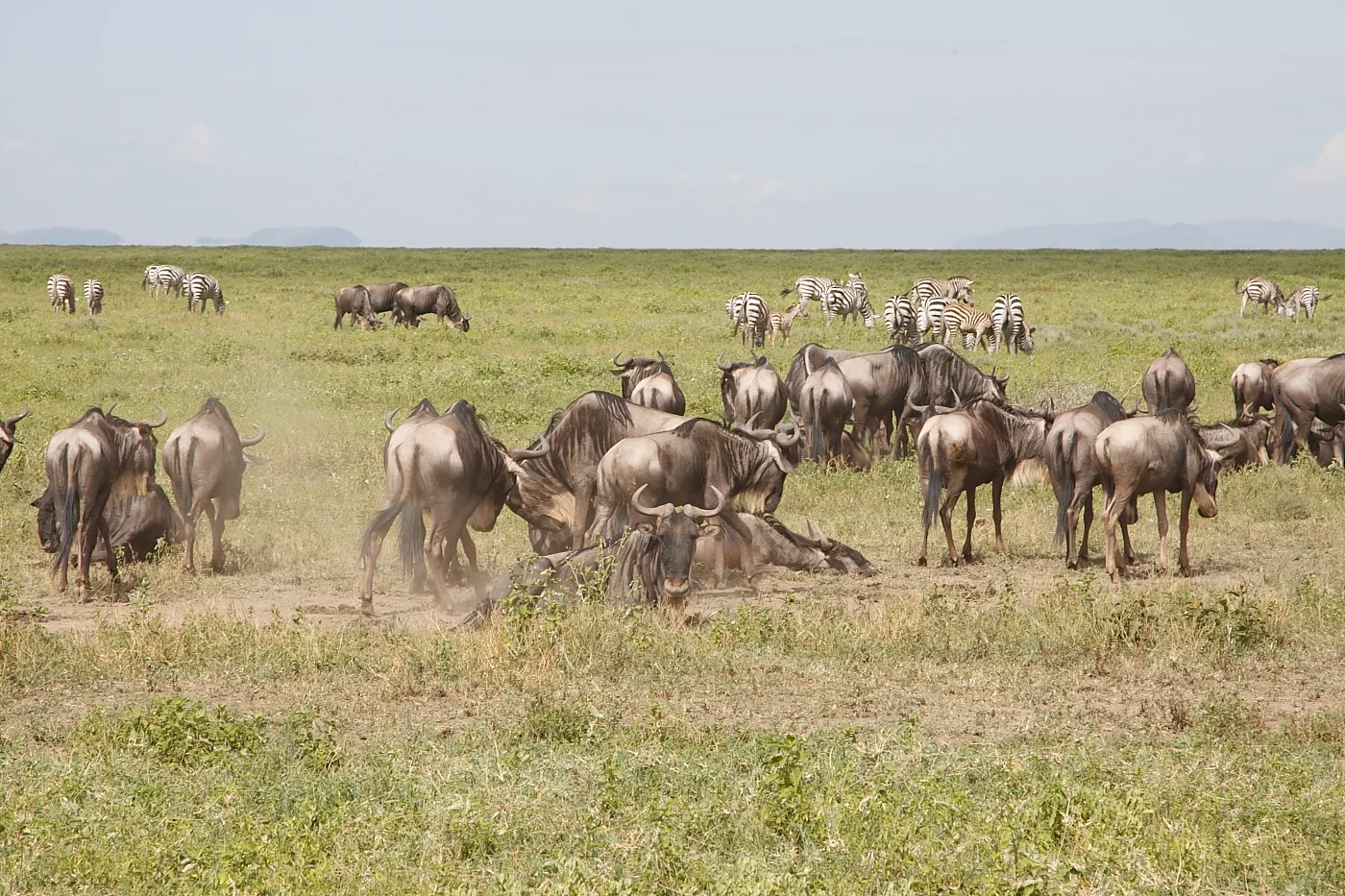
Although the Great Migration attracts worldwide attention, Serengeti National Park offers outstanding wildlife viewing throughout the year.
Resident populations of lions, leopards, elephants, giraffes, buffaloes, cheetahs, hippos, crocodiles, and countless bird species remain within the park regardless of migration movements.
Even if your visit does not coincide with a major migration event, the Serengeti continues to provide exceptional safari experiences.
This is one of the reasons it consistently ranks among the world’s greatest wildlife destinations.
Which Season Is Best for Wildlife Photography?
Each stage of the migration presents unique photographic opportunities.
The calving season provides intimate images of newborn animals, family interactions, and predator encounters against lush green landscapes. The dry season offers dramatic dust-filled scenes, golden lighting, and the famous Mara River crossings.
Photographers should consider their preferred subjects when selecting travel dates rather than assuming one season is universally better than another.
Professional guides understand lighting conditions, animal behavior, and vehicle positioning, helping photographers capture outstanding images throughout the year.
Weather and Safari Conditions Throughout the Year
The Serengeti can be visited during every month of the year, with each season offering its own advantages.
The dry season generally provides excellent road conditions, comfortable temperatures, and easier wildlife viewing as animals gather near water sources.
The green season offers vibrant scenery, abundant birdlife, dramatic cloud formations, and fewer safari vehicles at wildlife sightings.
Choosing the right season depends on your personal travel preferences rather than weather alone.
Should You Book Early?
Because migration safaris are among Tanzania’s most sought-after travel experiences, early planning is highly recommended.
Accommodation near the migration routes often fills many months in advance, particularly during the Mara River crossing season and the calving season.
Booking early provides greater flexibility when selecting preferred lodges, travel dates, and safari itineraries while allowing ample time to prepare for your journey.
Combining the Migration with Other Tanzania Attractions
Many visitors extend their Serengeti migration safari by exploring additional destinations across northern Tanzania.
The Ngorongoro Crater offers remarkable wildlife density and breathtaking scenery, while Tarangire National Park is famous for its giant elephant herds and iconic baobab trees. Lake Manyara National Park provides excellent birdwatching and diverse habitats, and Zanzibar offers the perfect beach escape after several days of safari.
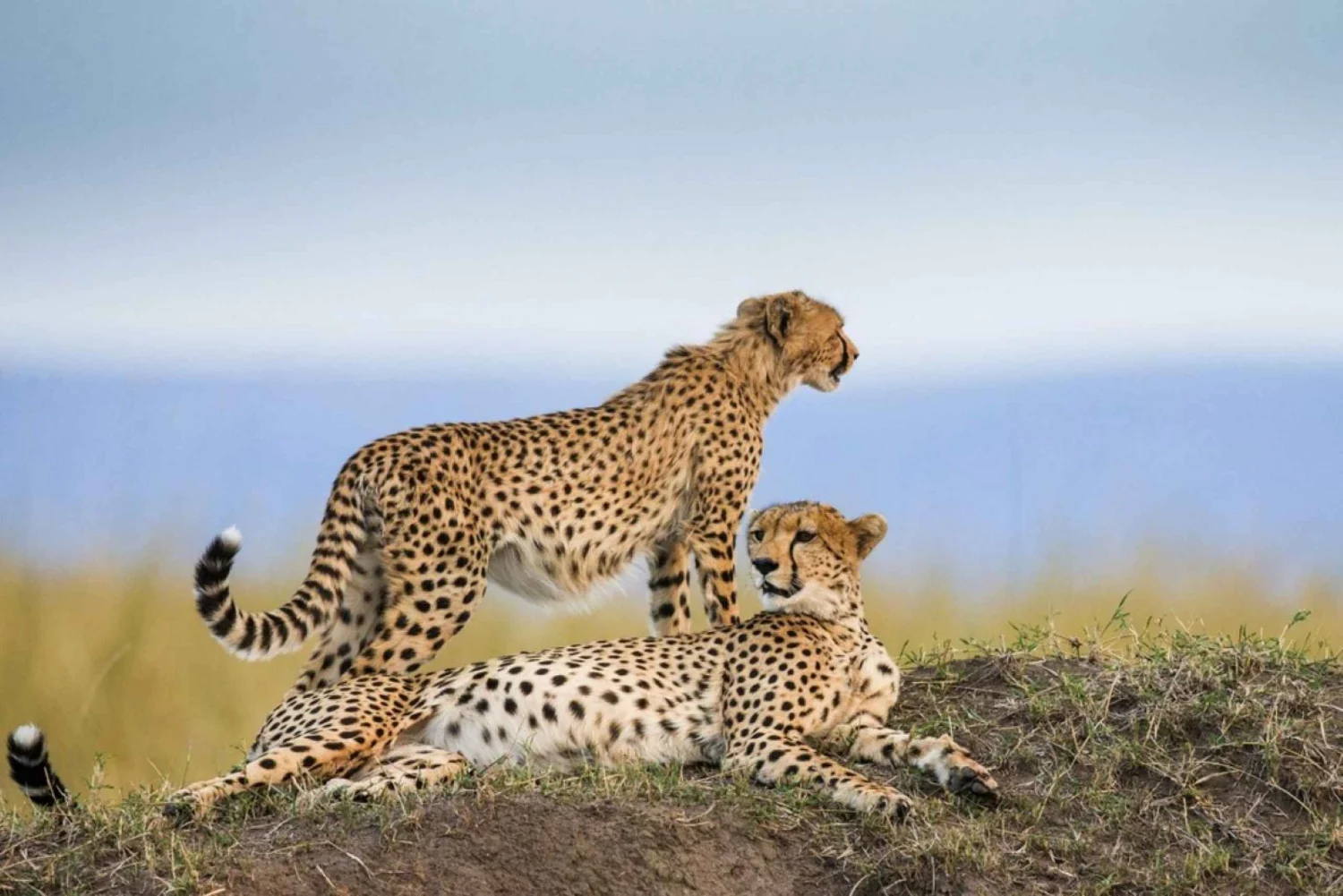
Combining multiple destinations creates a well-rounded Tanzanian adventure that balances wildlife, scenery, culture, and relaxation.
Why Choose Great Journey Safaris for Your Migration Safari?
At Great Journey Safaris, we specialize in carefully planned Serengeti migration safaris designed around current herd movements and seasonal wildlife patterns.
Our experienced local guides continuously monitor migration activity to maximize your opportunities for unforgettable wildlife encounters. We carefully select accommodations located close to migration areas whenever possible and design itineraries that combine comfort, flexibility, and exceptional game viewing.
Whether you hope to witness the dramatic Mara River crossings, the incredible calving season, or simply experience the vast beauty of the Serengeti, our team is committed to creating a safari tailored to your interests.
Final Thoughts
The best time to plan a Serengeti Wildebeest Migration Safari depends entirely on the experience you wish to enjoy. Every stage of the migration offers something extraordinary, from newborn calves and predator encounters in the southern plains to thrilling river crossings in the north and peaceful green-season landscapes filled with wildlife.
Rather than asking whether there is only one perfect time to visit, consider which migration event most inspires you. With thoughtful planning and the expertise of Great Journey Safaris, you can witness one of the greatest wildlife spectacles on Earth while exploring one of Africa’s most iconic safari destinations.
No matter when you choose to travel, the Serengeti’s timeless landscapes, incredible biodiversity, and ever-moving herds promise an unforgettable safari experience that will remain with you for a lifetime.